Productboard Spark: AI built for PMs. Now available & free to try in public beta.
Learn more
Productboard Spark: AI built for PMs. Now available & free to try in public beta.
Learn moreProductboard Spark: AI built for PMs. Now available & free to try in public beta.
Learn moreProductboard Spark: AI built for PMs. Now available & free to try in public beta.
Learn more
Infographic
In the following infographic, we’ll outline the differences between a modern approach to roadmapping and the manual processes that keep too many teams from increasing the pace and efficiency of product development.
Explore why many companies are embracing a solution that provides clarity for product managers looking to prioritize what their teams should work on next, and visibility for other partners and stakeholders invested in a product’s success.
Product development is entering a bold, new era of innovation, enabled by AI and data that's always up-to-date. Yet, many companies are still trying to build the products of tomorrow with the tools of yesterday.
Too often, that means product roadmaps created in spreadsheets or presentation apps, and user feedback scattered across disparate systems. This makes it difficult for others to access and integrate, and is devoid of the structure and best practices provided by a dedicated system.
The solution? Dynamic roadmapping.


There’s a new way to roadmap. With a variety of beautiful, proactive, dynamic solutions available, your product teams can move beyond the outdated, manual methods that have been holding them back.


Manual product roadmaps created with slides, spreadsheets, and other status quo tools feature time-sensitive information that needs to be updated.
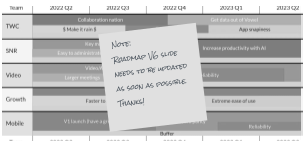

Without any manual updating required, modern roadmaps sync with the rest of your product plans and delivery solutions, so they always reflect the most current data.
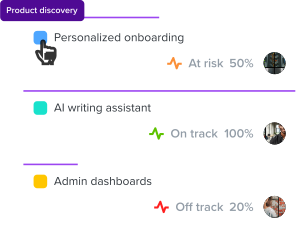


In the past, roadmaps were far too simple to provide meaningful value, or they were packed with far too much information, overwhelming stakeholders with unnecessary details.

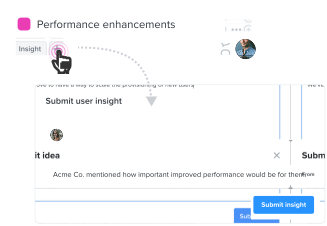
Modern solutions allow users to gain greater detail on specific areas of the roadmap they’re most interested in. They also allow stakeholders to add new ideas and feedback directly to the roadmap.

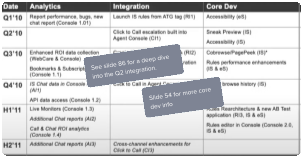
Sharing with stakeholders used to be difficult. Emailing decks made it hard to tailor roadmaps for specific audiences without creating different roadmap versions that had to be maintained in parallel.
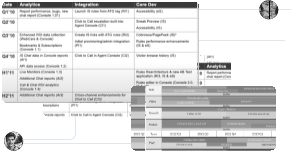

Now, it’s easy to keep everyone on the same page. Roadmapping solutions allow you to tailor your roadmaps for different groups of internal and external stakeholders, and then customize sharing settings so everyone can access the roadmaps they need.
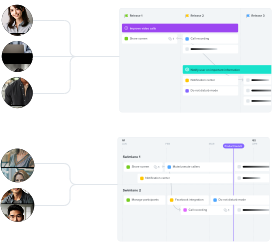

Used to visualize top-down plans based on the goals of the company’s leaders, old-school roadmaps aren’t equipped to identify insights from listening to the market. They often over-emphasize outputs, or what features the team plans to deliver by a specific date.
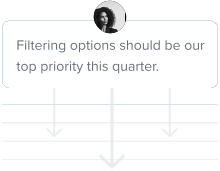

The new approach is organized by outcomes, or objectives and high-level initiatives that communicate the why behind the work. These roadmaps incorporate customer insights and reflect real customer needs. Now product managers have an opportunity to close the loop on customer feedback and requests as product features progress.
You may also like...


